Decline in Glycolytic ATP Production Proposed as a Fundamental Mechanism Limiting Lifespan

Glycolytic ATP production declines with age, contributing to common aging phenotypes such as reduced cell division and impaired DNA & mitochondria repair.”

Aging has long been attributed to a range of biological processes, including DNA damage, telomere shortening, and mitochondrial dysfunction. Yet, these frameworks often describe downstream consequences rather than a single unifying cause. Despite decades of research, a central question remains unresolved: what ultimately determines lifespan across species? Increasing attention has turned to cellular energy metabolism—particularly pathways responsible for rapid ATP generation—as a potential key driver. Understanding how these metabolic changes unfold over time, and how they influence survival, regeneration, and disease, remains a major challenge in aging biology.

A new research perspective published in Volume 18 of Aging-US introduces a unifying concept in aging biology, titled “A decline in glycolytic ATP production is the fundamental mechanism limiting lifespan; species with an optimal rate of decline over time survived.”

The study was led by first and corresponding author Akihiko Taguchi and co-author Yuka Okinaka, both from the Department of Regenerative Medicine Research, Foundation for Biomedical Research and Innovation at Kobe, Hyogo, Japan, in collaboration with Carsten Claussen and Sheraz Gul from the Fraunhofer Institute for Translational Medicine and Pharmacology, Hamburg, Germany.

A New Concept in Aging Biology

Rather than viewing aging as the result of accumulated damage alone, the authors propose that a gradual decline in glycolytic ATP production represents a central mechanism underlying aging across species. Glycolysis plays a critical role in supporting rapid energy demands, cell division, DNA repair, and mitochondrial maintenance. A reduction in this pathway over time may therefore contribute directly to many of the functional declines observed with aging.

An Evolutionary Perspective on Lifespan

The authors put forward a simple but compelling hypothesis: species that evolved with an optimal rate of decline in glycolytic ATP production were more likely to survive through natural selection.

In environments with limited food resources, increased energy efficiency—achieved through a shift toward oxidative metabolism—may provide a survival advantage. While this adaptation may benefit the species as a whole, it may also come at the cost of reduced cellular repair capacity and regenerative potential over time.

Linking Metabolism to Aging Phenotypes

Glycolytic ATP production is approximately 100 times faster than oxidative phosphorylation and is essential for high-demand cellular processes. Its decline with age is associated with impaired tissue repair, reduced cellular turnover, and increased vulnerability to stress. In contrast, cells that maintain high glycolytic activity—such as cancer cells—exhibit sustained proliferation and extended survival, highlighting the central role of metabolism in determining cellular lifespan.

Explaining Differences in Lifespan Across Species

Taken together, this framework may help explain several longstanding observations, including the wide variation in lifespan among species, the absence of biological immortality in most organisms, and the exceptional longevity of certain species such as the naked mole rat. According to the authors, differences in the rate of glycolytic decline may underlie these biological distinctions.

Implications for Aging and Disease

The authors also point to links between reduced glycolytic activity and age-related conditions, including neurodegenerative diseases, chronic kidney disease, and sarcopenia. Evidence from experimental and clinical studies suggests that enhancing glycolysis may help preserve cellular function and slow disease progression, supporting the relevance of this metabolic framework.

Future Directions

While the study is largely conceptual, it opens new directions for research into aging and longevity. Targeting glycolytic pathways—through metabolic, genetic, or cell-based approaches—may represent a promising strategy for promoting healthy aging. Further studies will be required to determine how these insights can be translated into safe and effective therapeutic interventions.

Conclusion

This study proposes a shift in how aging is understood, positioning the decline in glycolytic ATP production as a fundamental determinant of lifespan shaped by evolutionary pressures. By integrating metabolism, evolution, and cellular biology, the authors provide a cohesive framework that may guide future research and therapeutic development in aging science.

Click here to read the full research perspective published in Aging-US.

___

Aging-US is indexed by PubMed/Medline (abbreviated as “Aging (Albany NY)”), PubMed CentralWeb of Science: Science Citation Index Expanded (abbreviated as “Aging‐US” and listed in the Cell Biology and Geriatrics & Gerontology categories), Scopus (abbreviated as “Aging” and listed in the Cell Biology and Aging categories), Biological Abstracts, BIOSIS Previews, EMBASE, META (Chan Zuckerberg Initiative) (2018-2022), and Dimensions (Digital Science).

Click here to subscribe to Aging-US publication updates.

For media inquiries, please contact [email protected].
Rapamycin Rules out DNA Damage Theory of Aging

Dr. Mikhail Blagosklonny gleans an important new discovery in aging research—deduced from recent studies on short-lived mice and rapamycin.

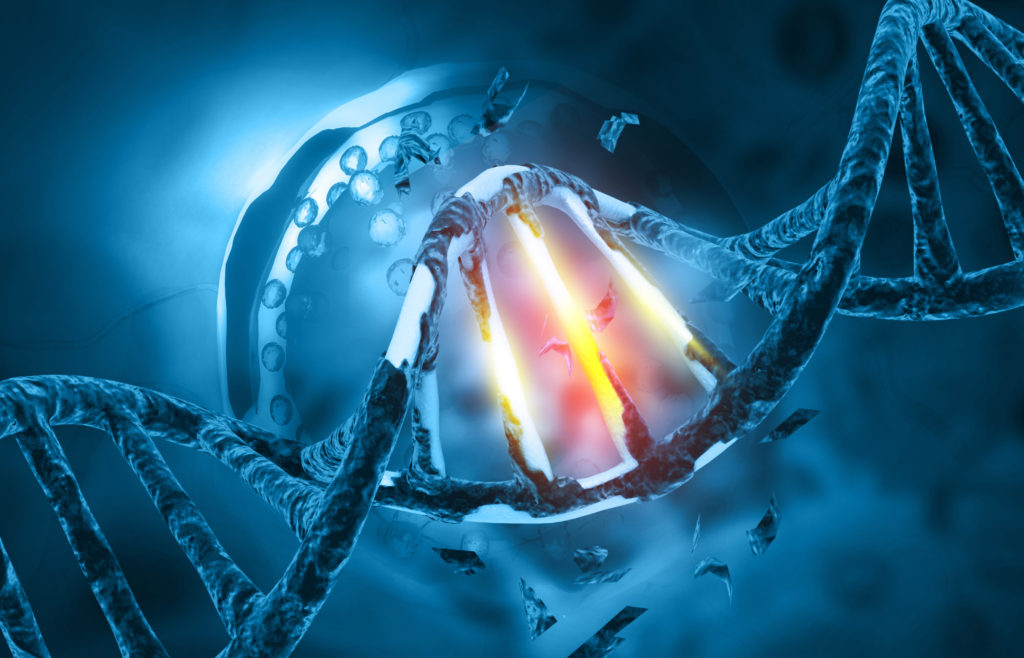
3D illustration of a mutated or damaged DNA strand

The Top-Performer series highlights papers published by Aging that have generated a high Altmetric attention score. Altmetric scores, located at the top-left of trending Aging papers, provide an at-a-glance indication of the volume and type of online attention the research has received.

Read Aging’s Top 100 Altmetric papers.

Listen to an audio version of this article

The exact mechanisms at play in the human aging process are still up for debate. A number of great minds in science have proposed plausible aging mechanisms and theories, such as DNA damage, telomere shortening, and DNA damage theories of aging. DNA damage theories suggest that aging is functional decline, caused by the accumulation of molecular damage. However, some scientists counterclaim that neither DNA damage nor telomere shortening limit lifespan or cause aging.

Dr. Mikhail Blagosklonny—an adjunct faculty member at the Roswell Park Comprehensive Cancer Center and Editor-in-Chief at Aging, Oncotarget, Oncoscience, and Cell Cycle—gleaned an important new perspective from recent aging studies, which could have been overlooked. He expanded on this discovery in a recent research perspective that was published in February 2021 in an issue of Aging, entitled: “DNA- and telomere-damage does not limit lifespan: evidence from rapamycin.” To date, this research paper has generated an Altmetric Attention score of 43.

Rapamycin is a macrolide antibiotic that has immunosuppressive properties, regulates a key cellular growth pathway (mTOR), and has been at the center of numerous studies of aging since its discovery in 1964. Dr. Blagosklonny explains that, based on findings from recent mouse-model studies of rapamycin’s effects on short-lived mice, normal aging is not caused by the accumulation of molecular damage or telomere shortening.

“Here I discussed new evidence that normal aging is not caused by accumulation of molecular damage or telomere shortening: while extending normal lifespan in mice, rapamycin failed to do so in mice dying from molecular damage (Figure 1).”

Evidence From Rapamycin

In the study which Dr. Blagosklonny refers to, researchers genetically modified mice to artificially shorten telomeres, administered rapamycin to normal mice and the telomerase-deficient short-lived mice, and observed the effects. In normal mice, results were congruent with a number of other studies that found lifespan was significantly extended. In the telomerase-deficient mice, lifespan was shortened as a result of rapamycin. 

“While shortening lifespan by 18% in unnatural telomerase-deficient mice, in the same study in natural mice, rapamycin increased lifespan by 39% and healthspan by 58% (measured as tumor-free survival) [3].”

Given that rapamycin prolongs life in normal mice, Dr. Blagosklonny asserts that this study proves that normal lifespan is not constrained by telomere length. Telomeres only become life-limiting when they are artificially shortened to the point where rapamycin can no longer extend lifespan. Furthermore, Dr. Blagosklonny explains that although molecular damage and telomere shortening could be life-limiting, they ultimately do not limit life because quasi-programmed aging occurs at a faster rate.

“Although molecular damage accumulates, this accumulation is not life-limiting because quasi-programmed aging terminates life first (Figure 1A). Quasi-programmed (hyperfunctional) aging is life-limiting, because it is favored by natural selection.”

Quasi-Programmed (Hyperfunctional) Aging

In 2012, Dr. Blagosklonny wrote another widely-read research perspective that explains in great detail what his proposed hyperfunction theory of aging is, entitled, “Answering the ultimate question “What is the Proximal Cause of Aging?

“According to hyperfunction theory, aging is quasi-programmed, a continuation of developmental growth programs, driven in part by hyper-functional signaling pathways including the mTOR pathway [9].”

He explains that hyperfunction is an excessive, yet normal function that occurs later in life. Hyperfunction in this context does not necessarily mean an increase in function and, in some cases, it even means a decrease in function. The same pathways and functions that drive growth and development earlier in life, also drive age-related diseases later in life. Dr. Blagosklonny proposes that quasi-programmed (hyperfunctional) aging is favored by natural selection and is what limits life.

“It is hyperfunctional signaling pathways such as mTOR (one of many) that drive both growth and aging, causing age-related diseases that in turn damage organs, leading to secondary loss of function.”

Many signaling pathways interact with mTOR to drive aging, forming a network, including MEK/MAPK, NF-kB, p63, HIF-1, and many others. Dr. Blagosklonny suggests that, in theory, there could be a number of mTOR-independent factors of quasi-programmed aging that are life-limiting, as well. He goes on to exemplify several lines of evidence concluding that it is not molecular damage that causes normal aging or limits life—it is normal, quasi-programmed (hyperfunctional) aging.

Conclusion

Dr. Blagosklonny mentions a forthcoming review that will be entitled: “When longevity drugs do not increase longevity: Unifying development-driven and damage-induced theories of aging.”

“Once again, damage accumulates and must cause death eventually, but quasi-programmed (hyperfunctional) aging terminates life first. Molecular damage can become life-limiting, when artificially accelerated or, potentially, when quasi-programmed aging is decelerated.” 

Click here to read the full research perspective, published in Aging.

Aging is an open-access journal that publishes research papers monthly in all fields of aging research and other topics. These papers are available to read at no cost to readers on Aging-us.com. Open-access journals offer information that has the potential to benefit our societies from the inside out and may be shared with friends, neighbors, colleagues, and other researchers, far and wide.

For media inquiries, please contact [email protected].

Aging is a proud participant in the AACR Annual Meeting 2021 #AACR21
  • Follow Us
