“This article is a contribution to the special issue of Aging celebrating the life and work of Misha Blagosklonny (more formally, Mikhail Vladimirovich Blagosklonny), who died in October 2024.”
In this review, David Gems and Alexander Carver from University College London, together with Yuan Zhao from Queen Mary University of London, present a new theoretical model to explain how aging leads to the development of chronic diseases. Drawing on evolutionary theory and biological research, the authors propose that aging is driven by a combination of early-life damage and harmful genetic activity in later life. This framework helps explain why diseases such as cancer, arthritis, and infections often appear in old age and offers insight into how they might be prevented.
Aging is the biggest risk factor for most chronic diseases, but the biological reasons for this association are still debated. The authors address this by introducing a two-stage model. In the first stage, individuals experience disruptions early in life, such as infections, injuries, or genetic mutations. Although the body can often contain or repair this damage, it does not fully eliminate it. In the second stage, which begins in later life, normal genetic processes begin to act in ways that are no longer beneficial. These late-life changes weaken the body’s ability to contain earlier damage, allowing it to develop into disease.
The review emphasizes that aging is a multifactorial process, shaped by many interacting causes rather than a single underlying mechanism. The model suggests that early-life disruptions and later-life genetic activity work together to drive age-related diseases. For example, dormant viruses can re-emerge as infections like shingles due to weakened immunity in older adults. Similarly, injuries to joints in youth can lead to osteoarthritis as tissues change with age. Inherited mutations may also remain silent for decades before contributing to conditions such as cancer or fibrosis later in life.
This two-stage model builds on long-standing ideas from evolutionary biology, particularly the theory that aging occurs because natural selection has less influence in later life. The authors also draw on studies in the roundworm Caenorhabditis elegans, where early mechanical damage can lead to fatal infections in old age, suggesting similar patterns may occur in humans.
Overall, this review presents a new framework for understanding how different causes of aging interact over time. By identifying two key stages, early-life damage and late-life genetic activity, it highlights potential strategies for promoting healthier aging through prevention and targeted intervention.
“Here, conceptual similarities between Mikhail Blagosklonny’s hyperfunction theory of aging and Vladimir Dilman’s elevation theory of aging are considered.”
In this work, Aleksei G. Golubev from the N.N. Petrov National Medical Research Center of Oncology reflects on the legacy of two influential Russian scientists, Vladimir M. Dilman and his son Mikhail V. Blagosklonny, who each introduced groundbreaking ideas about aging and cancer. Drawing from his own experience working in Dilman’s lab, Golubev explores how their ideas remain deeply relevant to today’s scientific understanding.
The essay connects Dilman’s “elevation theory” with Blagosklonny’s “hyperfunction theory,” two frameworks that challenge the conventional view of aging as a process of decline. Instead, both propose that aging results from continued biological processes that once supported growth but eventually become harmful when left unchecked.
Dilman believed that aging begins with reduced sensitivity in the hypothalamus, a brain region that regulates the body’s balance. This desensitization disrupts metabolism and hormone levels, setting the stage for many chronic illnesses. Decades later, Blagosklonny expanded on this idea at the molecular level. Central to his theory is the mTOR protein complex, which regulates growth and metabolism and is now a major focus in aging research.
Golubev also explores the historical and personal connections between the two scientists. Dilman, an endocrinologist trained in the Soviet Union, and Blagosklonny, a molecular biologist educated during the post-Soviet period, represent two generations shaped by a shared scientific tradition.
“Dilman’s scientific legacy is not as well recognized as it should be, partly due to bias in citation practices.”
The essay also draws attention to a troubling trend in science: the tendency to overlook early contributions, especially from non-Western scholars. Many of Dilman’s insights, such as the connection between high blood sugar, insulin resistance, and cancer, have since been validated by modern tools, yet his work is rarely cited. Golubev points out how citation practices, language barriers, and historical isolation have contributed to this lack of recognition.
Finally, Golubev encourages the scientific community to look back and acknowledge the foundational work that shaped modern aging science. It also highlights the importance of cross-generational knowledge in moving science forward. By tracing the intellectual journey from hormonal regulation in the brain to molecular pathways in cells, this essay demonstrated the relevance of old ideas in a new biological era.
Impact Journals, the publisher of Aging, is once again proudly sponsoring the Open Access Team in the annual Ride for Roswell.
BUFFALO, NY — June 10, 2025 — The Ride for Roswell, one of the USA’s largest cycling events supporting cancer research, returns to Buffalo on Saturday, June 28, 2025. Hosted annually by Roswell Park Comprehensive Cancer Center, this community-wide event brings together riders, volunteers, and supporters to raise funds for cancer research, celebrate survivors, and honor those lost to the disease.
“For the last 10 years, I have continuously participated in the Ride for Roswell in honor of those who have bravely fought cancer,” said Kurenov. “This journey is deeply personal for me. My father battled cancer, and some of my closest friends have fought through prostate and lung cancer with incredible strength.”
This year, the Open Access Team rides in honor of Dr. Mikhail (Misha) Blagosklonny, a visionary scientist who dedicated his career to advancing cancer and aging research. As the founding Editor-in-Chief of Aging, Oncotarget and Oncoscience, Dr. Blagosklonny was a pioneer of open-access publishing. His groundbreaking work on mTOR signaling and rapamycin transformed our understanding of cancer biology and healthy lifespan extension.
The 2025 Ride for Roswell features nine route options, ranging from 4 to 100 miles, all beginning at the University at Buffalo North Campus. Riders from across the USA and beyond are invited to participate and make a meaningful impact in the fight against cancer.
This ride is more than just a journey on two wheels—it’s a commitment to building a future where no one has to fear a cancer diagnosis. There is still time to support the Open Access Team in the 2025 Ride for Roswell. Whether by donating, joining the team, or sharing their story, every action brings us closer to better treatments, deeper understanding, and, ultimately, a cure.
“This special collection will explore key themes central to Dr. Blagosklonny’s scientific contributions, with a focus on mechanistic insights, translational approaches, and theoretical perspectives.”
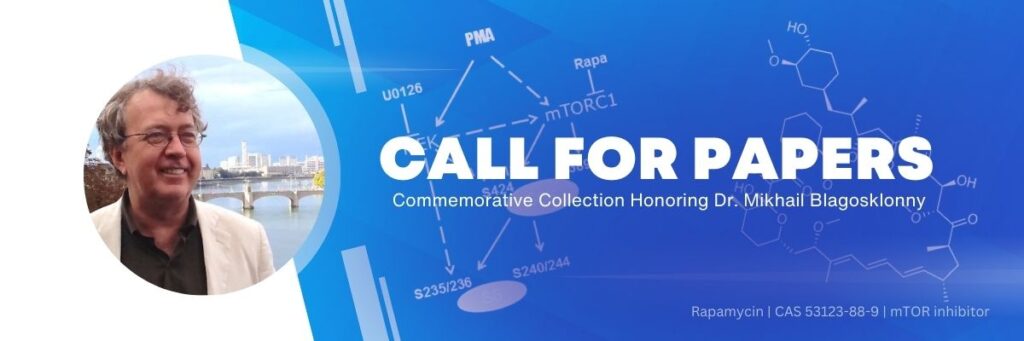
BUFFALO, NY — April 3, 2025 —Aging (Aging-US) is pleased to announce a special Call for Papers for a commemorative collection honoring the legacy of Dr. Mikhail (Misha) Blagosklonny, the founding editor of the journal and a pioneer in aging biology. His groundbreaking work shaped fundamental concepts in the field, particularly regarding the role of mTOR in aging and cancer, the use of rapamycin, bypassing senescence during the process of transformation, personalized medicine, and theories on why we age.
This special collection will explore key themes central to Dr. Blagosklonny’s scientific contributions, with a focus on mechanistic insights, translational approaches, and theoretical perspectives. We invite original research, reviews, and perspective articles covering topics such as:
The role of mTOR in aging and age-related diseases
Rapamycin and other pharmacological strategies to extend lifespan
Senescence bypass and its implications for cancer and regenerative medicine
Personalized medicine approaches in aging and longevity research
Theoretical models and evolutionary perspectives on aging
The special issue will be guest-edited by leading scientist in the field, David Gems, who will oversee the selection of high-quality contributions that reflect the depth and impact of Dr. Blagosklonny’s work.
We encourage researchers working on these topics to submit their manuscripts and contribute to this tribute to one of the most influential figures in aging research.
SUBMISSION DETAILS:
Submission Deadline: January 31, 2026 (UPDATED DEADLINE)
This review, written by Dr. David A. Barzilai, from Geneva College of Longevity Science and Healthspan Coaching LLC, summarizes the outstanding scientific contributions of the late Dr. Mikhail “Misha” Blagosklonny, Founding Editor-in-Chief of Aging. Dr. Blagosklonny’s research changed how researchers and scientists think about aging by introducing a new theory and promoting the use of rapamycin, an mTOR inhibitor, to slow aging and extend healthy life. Published shortly after his passing, this review honors Dr. Blagosklonny’s work and highlights how it challenged the traditional belief that aging is caused mainly by accumulated damage in the body.
Instead of describing aging as an accumulation of cellular damage, Dr. Blagosklonny’s Hyperfunction Theory redefined it as an ongoing biological process that goes into “overdrive” and leads to age-related diseases such as cancer, cardiovascular problems, and memory loss.
He identified the mTOR pathway—an important growth signal in the body—as a key driver of this process. His research showed that by using rapamycin, which slows down mTOR activity, it is possible to reduce aging-related diseases and promote longer, healthier lives.
Research supports many of Dr. Blagosklonny’s predictions about rapamycin’s benefits. Studies show that it can improve immune responses in older adults, making vaccines more effective. Other studies suggest rapamycin may help protect the heart, reduce harmful brain inflammation, and prevent the buildup of proteins linked to Alzheimer’s disease. Dr. Blagosklonny also proposed that rapamycin could reduce cancer risk by preventing excessive growth signals that contribute to tumor development.
Believing in rapamycin’s potential as a “longevity drug,” Dr. Blagosklonny advocated for its careful use with medical supervision and precise dosing. He called for further research and even envisioned “longevity clinics” where personalized anti-aging treatments could be provided. The review also highlights ongoing scientific efforts to refine rapamycin therapies and explore new options with fewer side effects.
In conclusion, Dr. Blagosklonny has inspired a global shift toward viewing aging as a condition that can be managed rather than an inevitable decline. His research has left a legacy in the fields of geroscience, aging, and cancer prevention.
“This contribution will undoubtedly be remembered in the coming decades and beyond as an innovative contribution to our theoretical grasp of the aging process and a foundation for exploring effective therapeutic approaches.”
Click here to sign up for free Altmetric alerts about this article.
—
Aging is indexed by PubMed/Medline (abbreviated as “Aging (Albany NY)”), PubMed Central, Web of Science: Science Citation Index Expanded (abbreviated as “Aging‐US” and listed in the Cell Biology and Geriatrics & Gerontology categories), Scopus (abbreviated as “Aging” and listed in the Cell Biology and Aging categories), Biological Abstracts, BIOSIS Previews, EMBASE, META (Chan Zuckerberg Initiative) (2018-2022), and Dimensions (Digital Science).
Click here to subscribe to Aging publication updates.
It is with great sadness and heavy heart that we announce the recent passing of Dr. Mikhail (Misha) V. Blagosklonny, our beloved Editor-in-Chief. Misha succumbed to metastatic lung cancer after a courageous battle.
Dr. Blagosklonny will be remembered as a brilliant and extraordinary scientist who dedicated his life to science. He was a visionary thinker, who made highly original contributions to cancer and aging research that were often ahead of their time.
Dr. Blagosklonny was born into a family of scientists. His mother, Professor of Medicine Yanina V. Blagosklonnaya, specialized in endocrinology and was a talented teacher, mentoring several generations of medical students. His father, Professor Vladimir M. Dilman, was a brilliant gerontologist, endocrinologist and oncologist, known for being a very charismatic person. He was the first person to encourage Misha to think about nature, aging, and philosophy.
Misha was a theorist by nature. While in school, he was deeply interested in physics and dreamed of becoming a theoretical physicist. Eventually, he chose biology, driven to study aging and age-related diseases, including cancer. He started as an experimentalist, but over the years, he became a theoretical biologist. In a way, his dream came true.
After earning his MD/PhD in cardiology and experimental medicine from Pavlov First State Medical University of St. Petersburg, Dr. Blagosklonny was awarded a prestigious Fogarty Fellowship from the National Institutes of Health (NIH) in Bethesda, MD. During his productive fellowship at the National Cancer Institute (NCI) in Dr. Leonard M. Neckers’s laboratory, he co-authored 18 publications in diverse areas of cancer research and was the last author on a clinical phase I/II trial paper. Then, he held a brief but productive senior research fellowship at the University of Pennsylvania in Dr. Wafik S El-Deiry’s laboratory before returning for several years to the NCI, where he collaborated with Dr. Tito Fojo. During those years, Dr. Blagosklonny co-authored over 30 research articles covering various topics in cancer research, including targeting HSP90, p53, Bcl2, Erb2, and Raf-1.
It was also at that time that, as a sole author, he published several experimental and theoretical papers encompassing the most important themes in his scientific career.
The first key theme focused on the selective protection of normal cells during cancer therapy. Despite the dogma, Dr. Blagosklonny showed that drug resistance provides opportunities for protection of non-resistant normal cells with selective killing of drug-resistant cancer cells. The original concept, titled “Drug-resistance enables selective killing of resistant leukemia cells: exploiting of drug resistance instead of reversal,” was published in Leukemia in 1999. The idea was so unconventional that, at first, it was incorrectly cited as “reversal of resistance” instead of “exploiting of resistance.”
Dr. Blagosklonny continued to develop the concept of normal cells protection in the following years. These are the most essential publications on this topic:
The second key theme was Dr. Blagosklonny’s innovative research method to generate new knowledge and ideas by synthesizing facts and observations from seemingly unrelated fields. This concept was published in Nature in 2002, titled “Conceptual biology: Unearthing the gems.”
The most significant outcome of this concept was the development of the hyperfunction (or quasi-programmed) theory of aging and the discovery of rapamycin as a potential anti-aging drug. Dr. Blagosklonny first published this idea in 2006, titled “Aging and immortality: quasi-programmed senescence and its pharmacologic inhibition.” Dr. Michael Hall, who discovered the protein TOR (Target of Rapamycin), credited Dr. Blagosklonny for “connecting dots that others don’t even see” in a Scientific American publication.
Dr. Blagosklonny held several faculty positions before joining Roswell Park Comprehensive Cancer Center as Professor of Oncology in 2009, and most recently served there as an adjunct faculty member. In his later years, Dr. Blagosklonny continued to develop his hyperfunction theory of aging and published extensively on the prevention of cellular senescence by rapamycin and other mTOR inhibitors, on cancer (an age-related disease) prevention by slowing down organismal aging, and on combinations of potential anti-aging drugs for use in humans.
These are just a few essential publications on those topics from more than 200 papers:
Dr. Blagosklonny has published more than 290 papers in peer-reviewed journals, serving as the first, last, or sole author on nearly all of his papers.
Dr. Blagosklonny was also a very passionate editor. He always dreamed of being an editor. It all began in 2002 when he was invited to become an Editor-in-Chief of the journalCell Cycle, a position he held for more than 16 years.
Understanding the importance of sharing scientific information without borders, he formulated the idea to launch journals for scientists, by scientists. Since cancer and aging research were always the main focus of his scientific interests, Dr. Blagosklonny, in collaboration with his colleagues, founded Aging in 2009 (co-editors-in-chief: the late Judith Campisi and David Sinclair) and Oncotarget in 2010 (co-editor-in-chief: Andrei Gudkov). Both journals are renowned for their outstanding Editorial Boards, innovative approaches, and significant popularity within the scientific community.
In 2012, Dr. Blagosklonny founded Oncoscience, a unique journal that publishes free of charge for both authors and readers. It can be considered a philanthropic endeavor.
In addition, Dr. Blagosklonny has served as an associate editor or a member of the editorial board of such journals as Cancer Research, International Journal of Cancer, Leukemia, Cell Death Differentiation, Cancer Biology & Therapy, American Journal of Pathology, Autophagy, and others.
Misha was a funny and witty person, who always had very interesting and unconventional opinions about various topics and was always looking for the roots of different matters. Everyone who knew him for a long time felt that they grew as a person because of his influence. He realized himself in this life as a scientist, editor, family man and a friend.
Dr. Blagosklonny envisioned his cancer battle as a mission to explore how metastatic cancer can be treated with curative intent. He published several articles about his battle, sharing original ideas and pushing the boundaries of cancer treatment in collaboration with his doctors. In his own words, Dr. Blagosklonny was near-curing of incurable cancer. He was in remission about two years and stayed active until the last days.
Dr. Blagosklonny passed away at his home in Boston, MA.
A special thank you to his colleagues and friends, who continuously supported Misha during his cancer battle: Dr. Tito Fojo, Dr. Wafik El-Deiry, Dr. Andrei Gudkov, Dr. Vadim Gladyshev and Dennis Mangan, to name a few.
Crossref is a non-profit organization that logs and updates citations for scientific publications. Each month, Crossref identifies a list of the most popular Aging (Aging-US) papers based on the number of times a DOI is successfully resolved.
Authors: Yutaro Kubota, Qinghong Han, Jose Reynoso, Yusuke Aoki, Noriyuki Masaki, Koya Obara, Kazuyuki Hamada, Michael Bouvet, Takuya Tsunoda, and Robert M. Hoffman
Authors: Pedro S. Marra, Takehiko Yamanashi, Kaitlyn J. Crutchley, Nadia E. Wahba, Zoe-Ella M. Anderson, Manisha Modukuri, Gloria Chang, Tammy Tran, Masaaki Iwata, Hyunkeun Ryan Cho, and Gen Shinozaki
Authors: Jérôme Salignon, Omid R. Faridani, Tasso Miliotis, Georges E. Janssens, Ping Chen, Bader Zarrouki, Rickard Sandberg, Pia Davidsson, and Christian G. Riedel
Quote: “[…] we see our work as an indication that combining different molecular data types could be a general strategy to improve future aging clocks.”
Quote: “[…] these data suggest that a methylation-supportive diet and lifestyle intervention may favorably influence biological age in both sexes during middle age and older.”
Authors: Brian H. Chen, Cara L. Carty, Masayuki Kimura, Jeremy D. Kark, Wei Chen, Shengxu Li, Tao Zhang, Charles Kooperberg, Daniel Levy, Themistocles Assimes, Devin Absher, Steve Horvath, Alexander P. Reiner, and Abraham Aviv
Quote: “The two key observations of this study are: (a) LTL is inversely correlated with EEAA; and (b) the LTL-EEAA correlation largely reflects the proportions of imputed naïve and memory CD8+ T cell populations in the leukocytes from which DNA was extracted.”
Authors: Ake T. Lu, Austin Quach, James G. Wilson, Alex P. Reiner, Abraham Aviv, Kenneth Raj, Lifang Hou, Andrea A. Baccarelli, Yun Li, James D. Stewart, Eric A. Whitsel, Themistocles L. Assimes, Luigi Ferrucci, and Steve Horvath
Quote: “We coin this DNAm-based biomarker of mortality “DNAm GrimAge” because high values are grim news, with regards to mortality/morbidity risk. Our comprehensive studies demonstrate that DNAm GrimAge stands out when it comes to associations with age-related conditions, clinical biomarkers, and computed tomography data.”
Quote: “Here we present the current state of development of the deep aging clocks in the context of the pharmaceutical research and development and clinical applications.”
Authors: Morgan E. Levine, Ake T. Lu, Austin Quach, Brian H. Chen, Themistocles L. Assimes, Stefania Bandinelli, Lifang Hou, Andrea A. Baccarelli, James D. Stewart, Yun Li, Eric A. Whitsel, James G Wilson, Alex P Reiner, Abraham Aviv, Kurt Lohman, Yongmei Liu, Luigi Ferrucci, and Steve Horvath
Quote: “Overall, this single epigenetic biomarker of aging is able to capture risks for an array of diverse outcomes across multiple tissues and cells, and provide insight into important pathways in aging.”
Authors: Jae-Hyun Yang, Christopher A. Petty, Thomas Dixon-McDougall, Maria Vina Lopez, Alexander Tyshkovskiy, Sun Maybury-Lewis, Xiao Tian, Nabilah Ibrahim, Zhili Chen, Patrick T. Griffin, Matthew Arnold, Jien Li, Oswaldo A. Martinez, Alexander Behn, Ryan Rogers-Hammond, Suzanne Angeli, Vadim N. Gladyshev, and David A. Sinclair
Quote: “We identify six chemical cocktails, which, in less than a week and without compromising cellular identity, restore a youthful genome-wide transcript profile and reverse transcriptomic age. Thus, rejuvenation by age reversal can be achieved, not only by genetic, but also chemical means.”
—
Click here to read the latest papers published by Aging.
—
Aging is an open-access, traditional, peer-reviewed journal that has published high-impact papers in all fields of aging research since 2009. All papers are available to readers (at no cost and free of subscription barriers) in bi-monthly issues at Aging-US.com.
Click here to subscribe to Aging publication updates.
The world’s leading Rapamycin researcher, Dr. Mikhail Blagosklonny, has a long background in cancer research and one important discovery he made around 2000 was that Rapamycin slowed down senescent cancer cells in different ways. After that step-by-step, his interest in the longevity field increased and he developed the very interesting hyperfunction theory of aging.
He has made a huge contribution in moving the Rapamycin longevity field forward and his research papers have impacted many people. For example, the Rapamycin physician Alan Green who – thanks to these papers – took the decision in 2017 to start prescribing Rapamycin off label. Today, Alan Green has the biggest clinical experience in the area with more than 1,200 patients. A lot of other physicians have after that also taken these steps and one of those, for example, is physician Peter Attia.
The podcast is for general information and educational purposes only and is not medical advice for you or others. The use of information and materials linked to the podcast is at the users own risk. Always consult your physician with anything you do regarding your health or medical condition.
The open-access journal Aging recently launched a new webpage showcasing the full Aging Scientific Integrity Process.
Listen to an audio version of this press release
BUFFALO, NY-November 8, 2022 – Scientific integrity is a crucial component of scholarly publishing for any credible journal. Peer-reviewed, open-access journal Aging (listed as “Aging (Albany NY)” by Medline/PubMed and “Aging-US” by Web of Science) has recently presented its Scientific Integrity process.
Launched in 2009, Aging is an open-access biomedical journal dedicated to publishing high-quality, aging-focused research. Aging publishes papers of general interest and biological significance in all fields of aging research and age-related diseases, including cancer—and now, with a special focus on COVID-19 vulnerability as an age-dependent syndrome.
Aging has a scientific integrity process to ensure that publications meet a number of scrupulous criteria for authenticity and integrity. Each published paper is thoroughly analyzed by diligent reviewers and services, including multiple in-house developed image forensics softwares. A growing industry of digital technologies, tools and ideas are constantly being added to Aging’s scientific integrity toolbox.
Aging’s Scientific Integrity process is built upon six critical components:
Easily Accessible Ethics Statements
Devotion to Industry Standards for Scientific Publishing
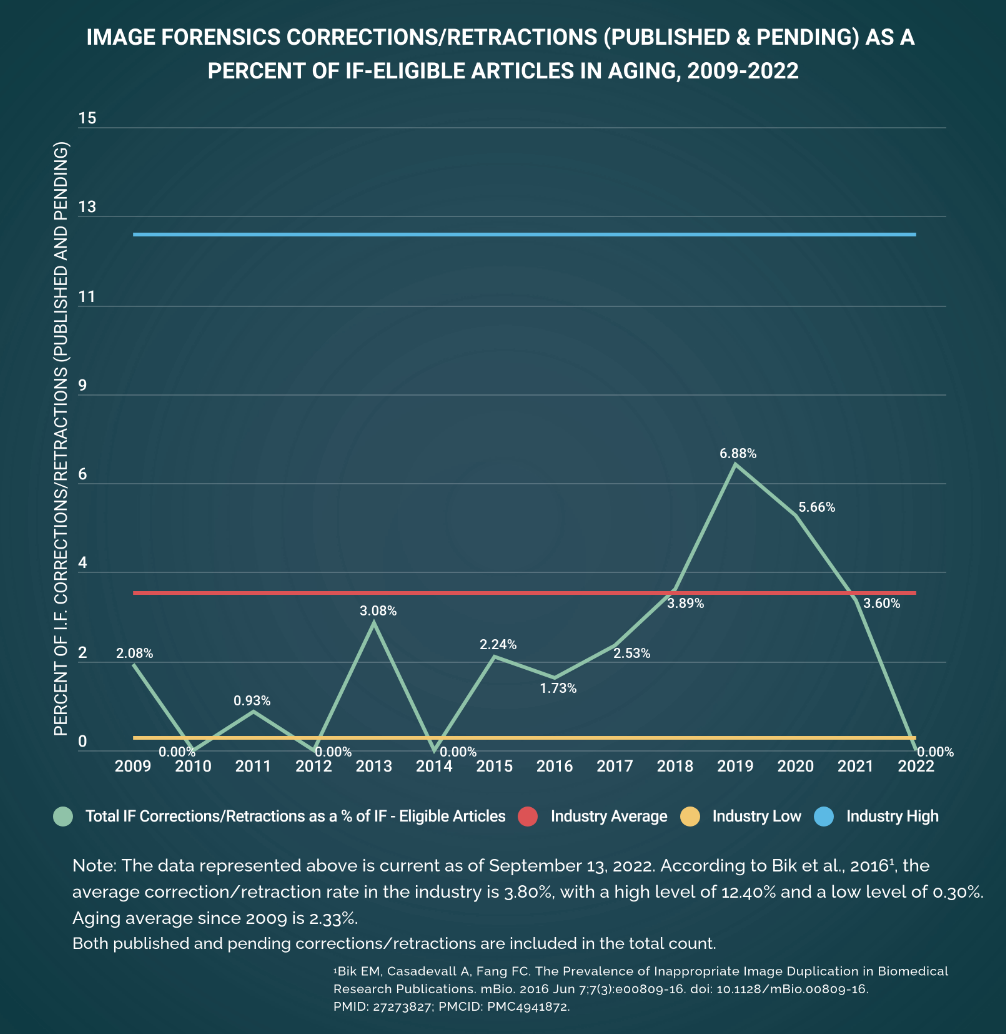
The new webpage also depicts publishing statistics in a detailed graph (below)—showcasing a visual representation of the number of post-publication corrections and retractions by Aging compared to the industry average, between 2010 and 2022. As of September 2022, Aging’s average rate of corrections/retractions since 2009 is a low 2.33%. The industry average correction/retraction rate is 3.80%.
Aging’s highly-effective scientific integrity process allows researchers to read, share and cite Aging papers with confidence.
Click here for Aging’s full Scientific Integrity Process.
Researchers tested antiviral, anticancer, and immunosuppressive drug combinations that may aid in treating neurodegenerative disorders, including Alzheimer’s disease.
Figure 5. Neratinib and AR12 combine to reduce the expression of HSP90, HSP70, GRP78 and HSP27 via autophagy.
The Trending with Impact series highlights Aging publications that attract higher visibility among readers around the world online, in the news, and on social media—beyond normal readership levels. Look for future science news about the latest trending publications here, and at Aging-US.com.
—
Listen to an audio version of this article
Heat shock proteins (HSPs), also known today as stress proteins, were first observed in fruit flies in the 1960s. After Dr. Ferruccio Ritossa inadvertently subjected a preparation of fruit fly salivary glands to a non-lethal increase in temperature, he discovered a new pattern of chromosomal “puffing.” In 1974, researchers identified the proteins that were encoded by the “puffs” recorded by Dr. Ritossa, and named them heat shock proteins.
These newfound proteins appeared to only become detectable when the cells were heated. Researchers later learned that HSPs can also be induced by oxidants, toxins, heavy metals, free radicals, viruses, and other stressors. Since its discovery, variations of this genetic system have been found in all bacteria, plants, and animals—including humans. HSPs have been well-studied since this revelation, and researchers now believe these molecular chaperones play important roles in protein refolding, aging-related diseases, and overall longevity.
“Toxic misfolded proteins are key drivers of AD [Alzheimer’s disease], ALS [Amyotrophic lateral sclerosis], HC [Huntington’s Chorea] and other neurodegenerative diseases.”
“In this paper we examined using isogenic colon cancer cells [with] several existing drugs that function by increasing autophagy and degrading misfolded proteins.”
THE STUDY
“Aberrant expression of chaperone proteins is found in many human pathologies including cancer, in virology and in AD, ALS and HC.”
In this study, researchers tested drugs that have been used preclinically and clinically in several anticancer studies. The drugs used were: AR12, an antiviral chaperone ATPase inhibitor; Neratinib, a tyrosine kinase inhibitor; a combination of AR12 and Neratinib; Fingolimod, an immunosuppressive sphingosine l-phosphate receptor modulator; MMF, monomethyl fumarate; and a combination of Fingolimod and MMF.
The cells they tested these drug combinations on in vitro included Vero cells (African Green Monkey kidney cells), isogenic HCT116 colon cancer cells (genetically manipulated colon cancer cells), and GB6 cells (glioblastoma cancer stem cells). They also used plasmids, antibodies, and siRNAs. Researchers acknowledged that the use of non-neuronal cells may be a limitation of this study.
“Our present studies were performed in non-neuronal cells and as a caveat, it is possible that our data in HCT116 and Vero cells will not be reflective of the same processes in neuronal cells.”
Despite this caveat, results from their research were promising. Some combinations of these drugs were capable of knocking down many disease specific proteins that form toxic aggregates inside cells and in extracellular environments via autophagy.
CONCLUSION
“As the mechanism of drug-action became clearer it was apparent that these agents should also be tested in neurodegenerative diseases. The entire neurodegenerative field needs rapid translational methods that target the underlying cause of disease, toxic misfolded protein. The findings from this work warrant further testing with a focus on clinical utility.”
Click here to read the full research paper, published by Aging.
Aging is an open-access journal that publishes research papers monthly in all fields of aging research and other topics. These papers are available to read at no cost to readers on Aging-us.com. Open-access journals offer information that has the potential to benefit our societies from the inside out and may be shared with friends, neighbors, colleagues, and other researchers, far and wide.